If you’ve ever wondered what’s really in your tap water — or noticed an unusual taste, smell, or colour — you’re not alone. Homeowners across Canada deal with water quality concerns every day, from chlorine and heavy metals to nitrates and microplastics. The challenge is that many standard filters only address part of the problem.
Reverse osmosis is one of the most effective residential water purification methods available. It removes a wide range of contaminants and delivers cleaner drinking water right at the tap. But before deciding if it’s the right choice for your home, it’s important to understand how it works, what it removes, and what it costs.
This guide covers the essentials — including how reverse osmosis systems work, what they filter out, how they compare to other water treatment options, and when installing one makes sense.
What Is Reverse Osmosis?
Reverse osmosis (RO) is a water purification process that forces water through a semi-permeable membrane to remove dissolved contaminants, leaving behind cleaner, filtered water. It’s one of the most effective filtration technologies available for residential use and can remove up to 99% of many common contaminants.
In simple terms: reverse osmosis works like an ultra-fine filter that lets clean water pass through while blocking many of the unwanted substances you don’t want to drink.
The term “reverse osmosis” refers to the reversal of natural osmosis — the process by which water naturally moves from a low-concentration solution to a high-concentration one. In reverse osmosis, pressure is applied to push water in the opposite direction, through a membrane with pores small enough to block dissolved salts, metals, bacteria, and more.
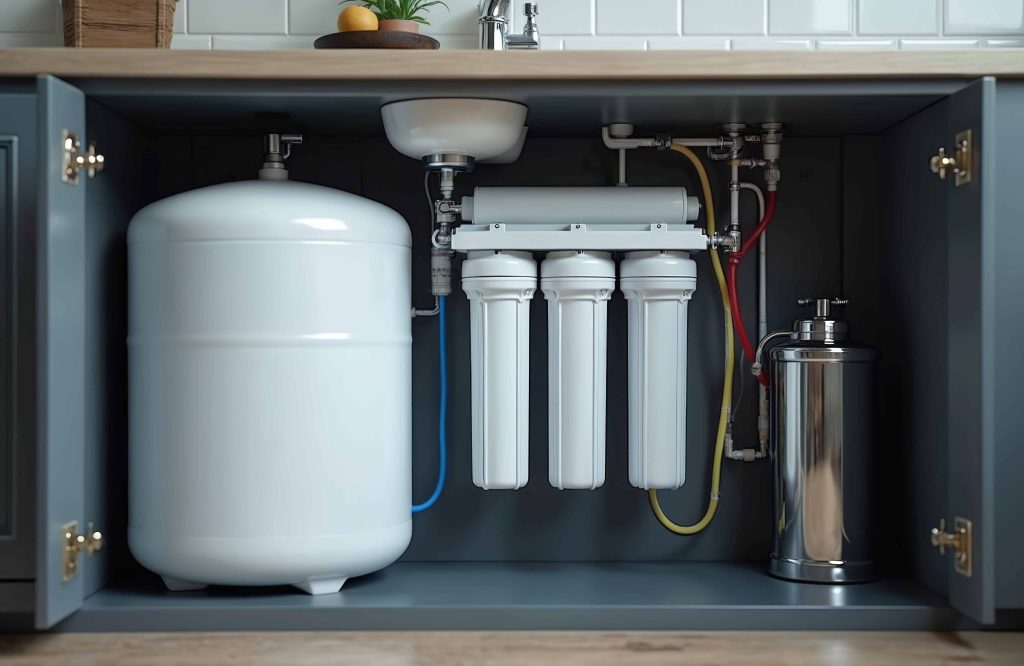
RO systems are commonly used in homes, restaurants, and commercial settings. For residential use, they’re most often installed under the kitchen sink to provide cleaner drinking and cooking water from a dedicated faucet.
How Do Reverse Osmosis Systems Work?
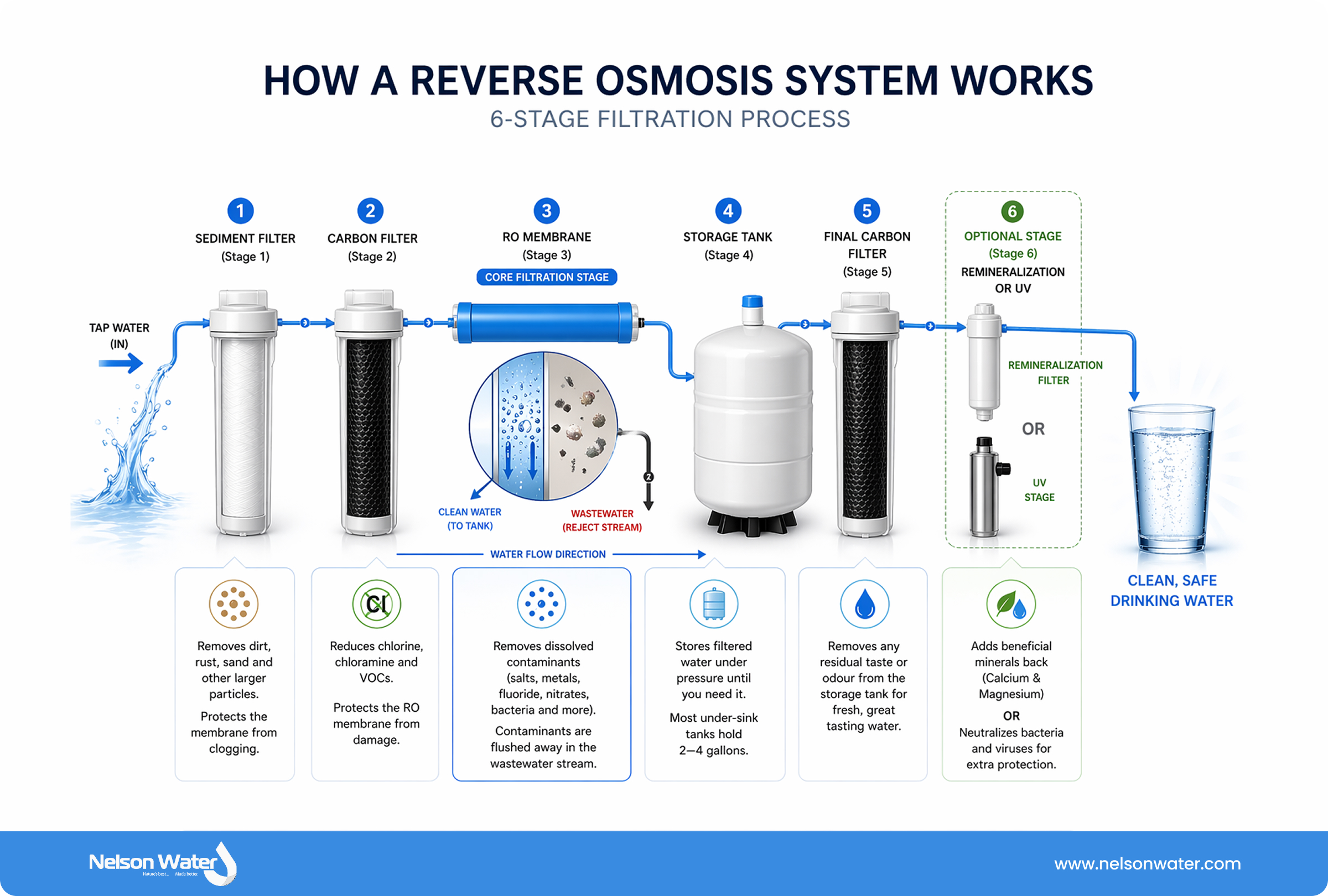
A reverse osmosis system works by pushing water through multiple filtration stages, culminating in a semi-permeable membrane that blocks contaminants while allowing clean water molecules to pass through.
Here’s a step-by-step breakdown of the process in a standard under-sink RO system:
Sediment Pre-Filter
Water first passes through a sediment filter, typically around 5 microns, that removes larger particles like dirt, rust, and sand. This protects the membrane from premature clogging.
Carbon
Pre-Filter
A carbon block filter removes chlorine, chloramine, and volatile organic compounds (VOCs). Chlorine in particular can degrade the RO membrane, so this stage is critical.
The RO Membrane
This is the core step. Water is pressurized and forced through the semi-permeable membrane. The membrane’s pores are approximately 0.0001 microns — small enough to block dissolved salts, heavy metals, fluoride, nitrates, and most other contaminants.
Storage Tank
Filtered water is stored in a pressurized tank until needed. Most under-sink tanks hold 2–4 gallons.
Post Carbon Polish Filter
Before reaching your glass, water passes through a final carbon filter that removes any residual taste or odour picked up from the storage tank.
Remineralization or UV
Higher-end systems may add an optional remineralization filter, which adds calcium and magnesium back into the water, or a UV stage, which neutralizes any bacteria or viruses the membrane may have missed.
Suggested Reading: Understanding the Water Softener Regeneration Process
What Does Reverse Osmosis Remove?
Reverse osmosis removes the vast majority of dissolved contaminants from water, including heavy metals, nitrates, fluoride, microplastics, and biological pathogens. This sets it apart from simpler filter types that target only one or two categories of pollutants.
Heavy Metals
RO membranes are highly effective against lead, arsenic, cadmium, chromium, and barium. Lead exposure — especially in older homes with aging pipes — is a significant health concern, and RO is one of the few residential technologies that reliably removes it.
Nitrates
Nitrates are a serious issue in agricultural regions and for homes on well water. They’re colourless and tasteless, making them invisible without testing. High nitrate levels are particularly dangerous for infants. Reverse osmosis removes 83–92% of nitrates on average.
Fluoride
RO removes approximately 85–95% of fluoride. This is one of the few proven methods for fluoride removal at home. Whether or not you want fluoride removed is a personal choice, but RO gives you that control.
Microplastics
A growing body of research has found microplastics in tap water, bottled water, and even human blood. RO membranes effectively filter particles as small as 0.001 microns — far smaller than microplastic particles — making them one of the best defences against this emerging contaminant.
What RO Does NOT Remove
Reverse osmosis is not effective against dissolved gases like radon or certain pesticides with a molecular weight lower than water. It also doesn’t soften water in the traditional sense (it removes hardness minerals, but it’s not the same as an ion-exchange water softener). Always match your filtration choice to your actual water quality test results.
Is Reverse Osmosis Water Healthy?
Yes, reverse osmosis water is healthy and safe to drink. The filtration process removes harmful contaminants without introducing anything new, and the concern about mineral loss — while valid — is manageable and often overstated.
The Mineral Question
RO water is often called “demineralized” because the membrane removes minerals such as calcium, magnesium, and potassium along with contaminants. That has led to concerns that the water is somehow “empty” or less healthy. In practice, the issue is often overstated.
Most of the minerals your body needs come from food, not drinking water, and low-mineral water is generally considered safe for healthy adults.
For homeowners who prefer the taste of mineralized water, many modern reverse osmosis systems include a remineralization stage that adds calcium and magnesium back in while also improving taste and helping balance pH.
The Safety Record
Reverse osmosis has been used in hospitals, dialysis centres, and food production for decades. The technology itself is well-proven. For residential drinking water, it consistently outperforms carbon-only filters, pitcher filters, and UV-only systems in terms of contaminant removal breadth.
Who Benefits Most
RO is particularly beneficial for:
- Pregnant women and infants (vulnerable to nitrates and lead)
- Immunocompromised individuals
- Households on well water with unknown contamination
- Anyone in an area with known water quality issues
Types of Reverse Osmosis Systems
There are three main types of residential reverse osmosis systems: under-sink, whole-home, and countertop. Each serves different needs and comes with different installation requirements and costs.
Under-Sink RO Systems
The most common type. Installed beneath the kitchen sink, connected to the cold water line, with a dedicated faucet on the countertop. These systems treat water at the point of use — ideal for drinking and cooking. Most hold 2–4 gallons in a storage tank and produce 50–100 gallons per day. Installation requires basic plumbing skills or a professional.
Best for: Most homeowners who want clean drinking and cooking water without overhauling their entire plumbing system.
Whole-Home (Point-of-Entry) RO Systems
Installed at the main water line, treating all water entering the home. This means filtered water at every tap, toilet, shower, and appliance. These systems are significantly more expensive (both upfront and for ongoing operation) and require a large storage tank, a booster pump, and professional installation.
Best for: Homes with severe water quality problems, well water with high contamination, or households with specific medical needs.
Countertop RO Systems
Compact units that sit on the counter and connect to the tap without permanent installation. Newer models (like the AquaTru and similar brands) are tankless and produce water on demand. They’re ideal for renters or those who don’t want to modify their plumbing.
Best for: Renters, apartment dwellers, or those wanting a no-installation solution.
How Much Does a Reverse Osmosis System Cost?
A standard under-sink reverse osmosis system costs between $150 and $600 for the unit itself, with installation adding $150–$300 if done professionally, and annual maintenance running $50–$150 per year.
Reverse Osmosis System Cost
| System Type | Price Range |
|---|---|
| Countertop RO | $150–$400 |
| Under-Sink RO (standard) | $150–$600 |
| Under-Sink RO (with remineralization/UV) | $400–$900 |
| Whole-Home RO | $1,500–$5,000+ |
Installation Cost
Under-sink systems can be DIY-installed in 1–2 hours with basic plumbing knowledge. Professional installation typically runs $150–$300 in most Canadian markets. Whole-home systems require a licensed plumber and can cost $300–$800+ to install.
Filter Replacement Costs
This is the ongoing cost most buyers underestimate:
- Pre/post carbon filters: Replace every 6–12 months — approximately $30–$60/year
- RO membrane: Replace every 2–3 years — approximately $40–$80
- Remineralization filter: Replace every 6–12 months — approximately $20–$40/year
Total annual operating cost: $50–$150 for a standard under-sink system.
Suggested Reading: The Cost of Water Filtration Systems in Ontario
Reverse Osmosis vs. Other Water Filtration Solutions
Reverse osmosis is the most comprehensive residential filtration option, but it’s not always the right tool for every problem. Here’s how it compares to the most common alternatives.
RO vs. Carbon Filters
Carbon filters (including pitcher filters like Brita and under-sink carbon blocks) are excellent at removing chlorine, VOCs, and improving taste. However, they do not remove:
- Heavy metals (lead, arsenic)
- Nitrates or fluoride
- Dissolved salts or TDS
- Most microplastics
If your only concern is chlorine taste or mild sediment, a carbon filter may be sufficient and far less expensive. If your water contains lead, nitrates, or other dissolved contaminants, RO is the better choice.
RO vs. Water Softeners
Water softeners and RO systems are often confused — but they solve different problems. A water softener uses ion exchange to replace calcium and magnesium (hardness minerals) with sodium, which prevents scale buildup on pipes and appliances. It does not remove heavy metals, nitrates, or microplastics.
RO removes hardness minerals entirely (along with everything else), but isn’t designed to protect plumbing from scale the way a softener does. Many homeowners with hard, contaminated well water use both — a softener to protect appliances, and an RO system for drinking water.
RO vs. Distilled Water
Both RO and distillation produce very pure water with low TDS. The key differences:
- Distillation heats water to steam, then condenses it — removing virtually everything, but requiring significant energy and time (usually 4–6 hours per gallon)
- RO uses pressure and a membrane — faster, more energy-efficient, and practical for home use
- Distilled water is slightly purer (lower TDS), but the difference is negligible for drinking purposes
For everyday residential use, RO is the more practical and cost-effective choice.
Do You Need a Reverse Osmosis System?
Whether you need reverse osmosis depends on your water source, your local water quality, and your household’s specific health concerns. Here’s a practical framework for deciding.
Well Water
If your home uses a private well, reverse osmosis is strongly recommended. Unlike municipal water, well water is not treated or regularly tested by a utility. Common well water issues include:
- High nitrates from agricultural runoff
- Iron and manganese
- Bacteria and coliform
- Arsenic (particularly in certain geological regions of Ontario and Eastern Canada)
- Hard water and sediment
An annual well water test is the starting point. If your test shows nitrates above 10 mg/L, arsenic, or other health-relevant contaminants, RO should be seriously considered.
City Water (Municipal Supply)
Municipal water is treated and tested, but “treated” doesn’t mean perfectly clean. Residual chlorine, chloramine, and trace pharmaceuticals are common. In older urban areas, lead from aging service lines remains a real concern. If you live in an older home (pre-1990) in Ottawa or elsewhere in Ontario and are unsure about your pipes, testing for lead is worthwhile. If results are elevated, RO is one of the most effective solutions.
Signs You May Need RO
- Your water has an unusual taste, smell, or discolouration
- You’ve received a boil water advisory or water quality notice
- You’re on well water without recent testing
- Your home was built before 1990 and has original plumbing
- You have an infant, pregnant household member, or immunocompromised individual
- Your water test shows elevated heavy metals, nitrates, or TDS
Benefits of Reverse Osmosis Water
The primary benefits of reverse osmosis are significantly cleaner water, improved taste, and reduced exposure to a broad range of health-relevant contaminants.
Cleaner, Safer Water
RO removes up to 99% of many contaminants that other filters miss — including lead, arsenic, fluoride, nitrates, and microplastics. For households with known water quality issues, this level of filtration provides genuine peace of mind.
Better Taste and Cooking Results
Dissolved minerals, chlorine, and other compounds affect the taste of water — and of anything you cook with it. Coffee, tea, soups, and pasta all taste noticeably better when made with clean, low-TDS water. Many people who switch to RO report that they stop buying bottled water within weeks.
Long-Term Health Value
Consistent removal of contaminants like lead and arsenic has well-documented long-term health benefits, particularly for children and frequent consumers. The upfront investment in an RO system is modest compared to the cumulative cost — and health risk — of drinking unfiltered water over years.
Environmental Impact
Switching from bottled water to home RO filtration can eliminate thousands of single-use plastic bottles per year per household — a meaningful environmental benefit alongside the health one.
Not Sure If Reverse Osmosis Is Right for You?
Every home’s water is different, and what works well in one area may not be the right solution for another. Reverse osmosis can be a great option, but it’s most effective when it’s chosen based on actual water conditions — not guesswork.
If you’re exploring your options or simply want to understand your water a little better, a quick test and some expert guidance can go a long way. The Nelson Water team can help you make sense of your results and walk you through what solutions make the most sense for your home — no pressure, just clear information.
Start with a free water test and get straightforward answers about your water.
Frequently Asked Questions
Does reverse osmosis remove fluoride?
Yes. Reverse osmosis removes approximately 85–95% of fluoride from drinking water. It is one of the only proven home filtration methods capable of significantly reducing fluoride levels. If fluoride removal is a priority, ensure the system is NSF/ANSI 58 certified.
Does reverse osmosis remove microplastics?
Yes. RO membranes filter particles down to 0.0001 microns, which is far smaller than microplastics. It is one of the most effective residential filtration methods for removing them.
Is reverse osmosis water good for you?
Yes, RO water is safe and healthy. It removes harmful contaminants without adding anything new. While it also removes minerals, this can be addressed with remineralization or a balanced diet.
Is reverse osmosis water the same as distilled water?
No. Distillation uses heat and condensation, while RO uses pressure and a membrane. Both produce low-TDS water, but RO is faster and more practical for home use.
How does a reverse osmosis system work?
Water is pushed under pressure through a semi-permeable membrane with extremely small pores. Contaminants are blocked and flushed away, while clean water is stored and delivered through your tap.
How much does a reverse osmosis system cost?
Under-sink systems typically cost $150–$600, with installation adding $150–$300. Maintenance is about $50–$150 per year. Whole-home systems can range from $1,500 to $5,000+.