Experiencing a slow flow rate in your reverse osmosis (RO) system can be both frustrating and disruptive, especially when it’s your primary source of clean, filtered water. A slow flow rate typically indicates that something within the system is preventing water from flowing freely.
In this blog, we’ll explore the five most common reasons why your reverse osmosis system has a slow flow rate and offer practical tips on how to fix these issues. By understanding the causes behind a sluggish system, you can get your water flowing at the optimal rate once again and ensure your system is working efficiently.
Suggested Reading: What Is Reverse Osmosis? The Complete Guide to RO Water Filtration
1. Clogged Filters and Membrane
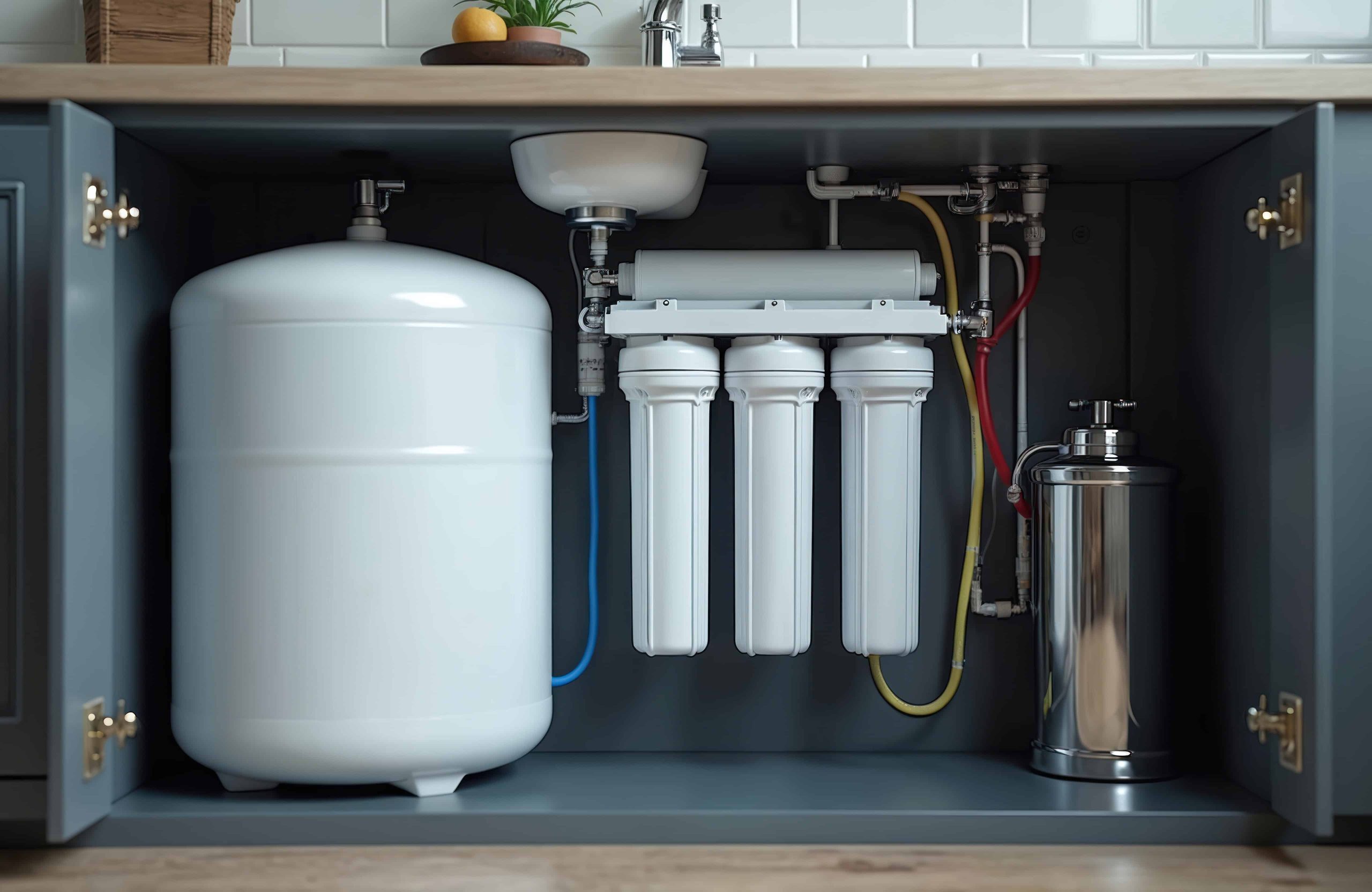
The filters and membrane are crucial components of your RO system, responsible for removing contaminants and ensuring water purity. Over time, they can become clogged with debris, minerals, and other impurities, which drastically reduces the flow rate. If you’ve noticed a gradual decrease in water flow, it’s likely time to replace the filters. Most RO systems require filter changes every 6-12 months, depending on water quality and usage. The membrane, which does the heavy lifting in filtration, should typically be replaced every 2-3 years.
- Replace pre and post-filters regularly, typically every 6-12 months.
- Swap out the membrane every 2-3 years to prevent slowdowns.
- Perform regular system maintenance to keep water flow consistent.
2. Low Air Pressure in the Storage Tank
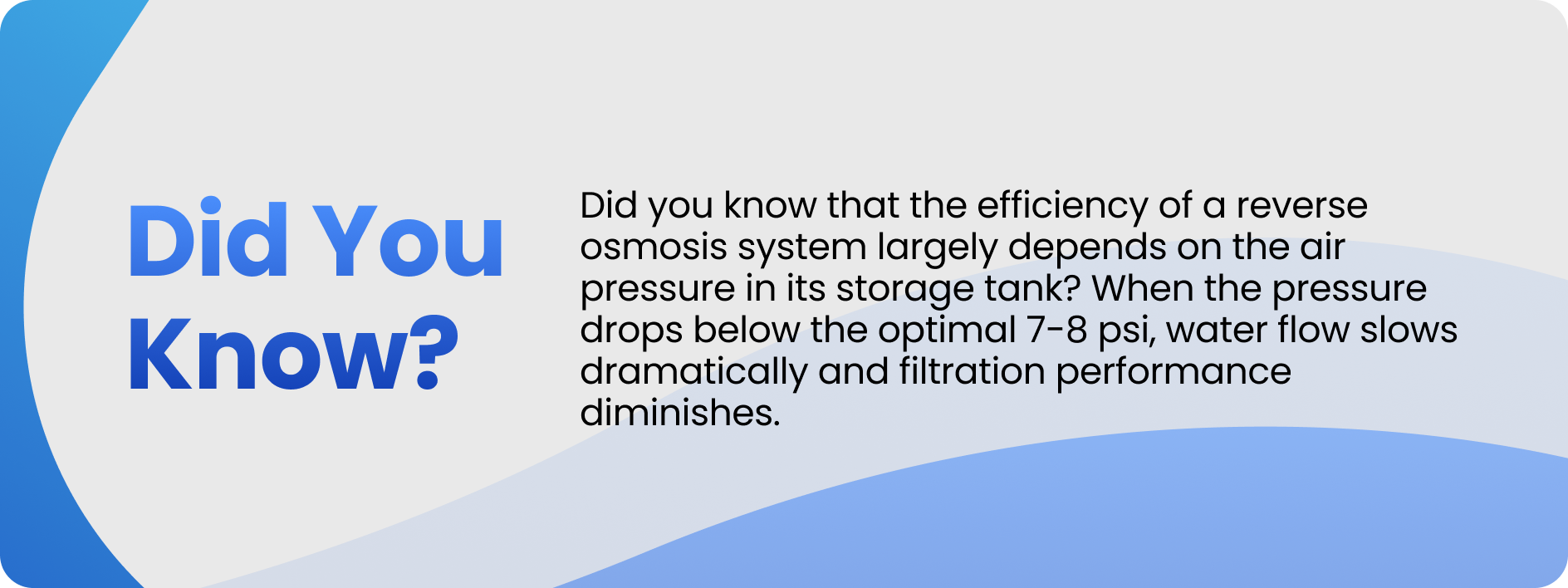
The storage tank in your reverse osmosis system holds purified water until it’s needed. Inside this tank is a bladder, which relies on air pressure to push water through the faucet. If the air pressure is too low, water flow becomes weak and sluggish. This is a common issue that’s easy to overlook but simple to fix. The ideal air pressure in the tank should be around 7-8 psi when the tank is empty. If the pressure is below this range, your system will struggle to push water out effectively, resulting in a slow flow.
- Use an air gauge to regularly check the tank pressure.
- Maintain a pressure of 7-8 psi when the tank is empty.
- If the pressure is low, use a pump to add air and restore optimal flow.

3. Low Water Supply Pressure
A reverse osmosis system requires adequate incoming water pressure to function properly. Water pressure that’s too low will reduce the system’s ability to filter and deliver water at the expected rate. Most RO systems require a minimum of 40 psi to work efficiently. If your home’s water pressure is below this, the RO system will struggle, leading to slow flow or even stopping altogether. Causes of low pressure can include municipal water supply issues, plumbing problems, or even blocked pipes.
- Ensure that your home’s water pressure remains at 40-60 psi.
- Consider installing a booster pump if water pressure consistently falls below the required level.
- Regularly check pipes and plumbing for any blockages or damage that could be affecting pressure.
4. Fouled RO Membrane
The RO membrane is a key component in the filtration process, and when it becomes fouled by hard water deposits, minerals, or other contaminants, the flow of water is significantly reduced. This issue is particularly common in areas with hard water or high mineral content. A fouled membrane may still allow water to pass through, but the flow will be much slower, and the water quality may decrease. If cleaning the membrane doesn’t restore water flow, it’s likely time for a replacement.
- Clean the RO membrane regularly if your water has a high mineral content.
- In cases of severe fouling, membrane replacement may be necessary.
- Using a water softener ahead of your RO system can help prevent fouling.
Suggested Reading: Why Does My Softened Water Taste Salty After Regeneration?
5. Faulty Flow Restrictor
The flow restrictor in an RO system is responsible for controlling the flow of wastewater through the membrane. If the flow restrictor is faulty or damaged, it can restrict the amount of water that passes through the system, resulting in a slow flow rate. This is a less common issue but should still be checked if other troubleshooting steps don’t solve the problem. A malfunctioning flow restrictor can also lead to an imbalance in the pressure needed for efficient water filtration.
- Inspect the flow restrictor for any damage or signs of malfunction.
- If the restrictor isn’t functioning correctly, replace it to restore the flow.
- Ensure the restrictor matches the membrane size for optimal performance.
Conclusion
When your reverse osmosis system experiences a slow flow rate, it’s usually due to one or more of these common issues: clogged filters, low tank pressure, low water supply, a fouled membrane, or a faulty flow restrictor. Addressing these problems will not only restore your system’s performance but also ensure you’re getting the highest quality water possible. Regular maintenance is key to preventing slow flow rates and keeping your system in top condition.
Need Professional Assistance with Your Reverse Osmosis System in Ottawa?
Nelson Water offers expert maintenance and repair services for reverse osmosis systems in Ottawa. From replacing clogged filters to boosting system pressure, our team is here to ensure your water flows smoothly. Contact us today to schedule an appointment and keep your water filtration system in peak condition!
Not sure why your RO system is running slowly?
Nelson Water can help diagnose the issue and restore proper water flow and performance.