
If you’ve noticed an unpleasant smell coming from your water softener, you’re not alone – many homeowners experience this issue. If you’re wondering, “Why does my water softener smell bad?“, the good news is that there are solutions to fix this problem.
In this blog, we’ll explore the reasons behind the odour, how to resolve it, and ways to keep your water softener smelling fresh and functioning efficiently.
Why Does My Water Softener Smell Bad?
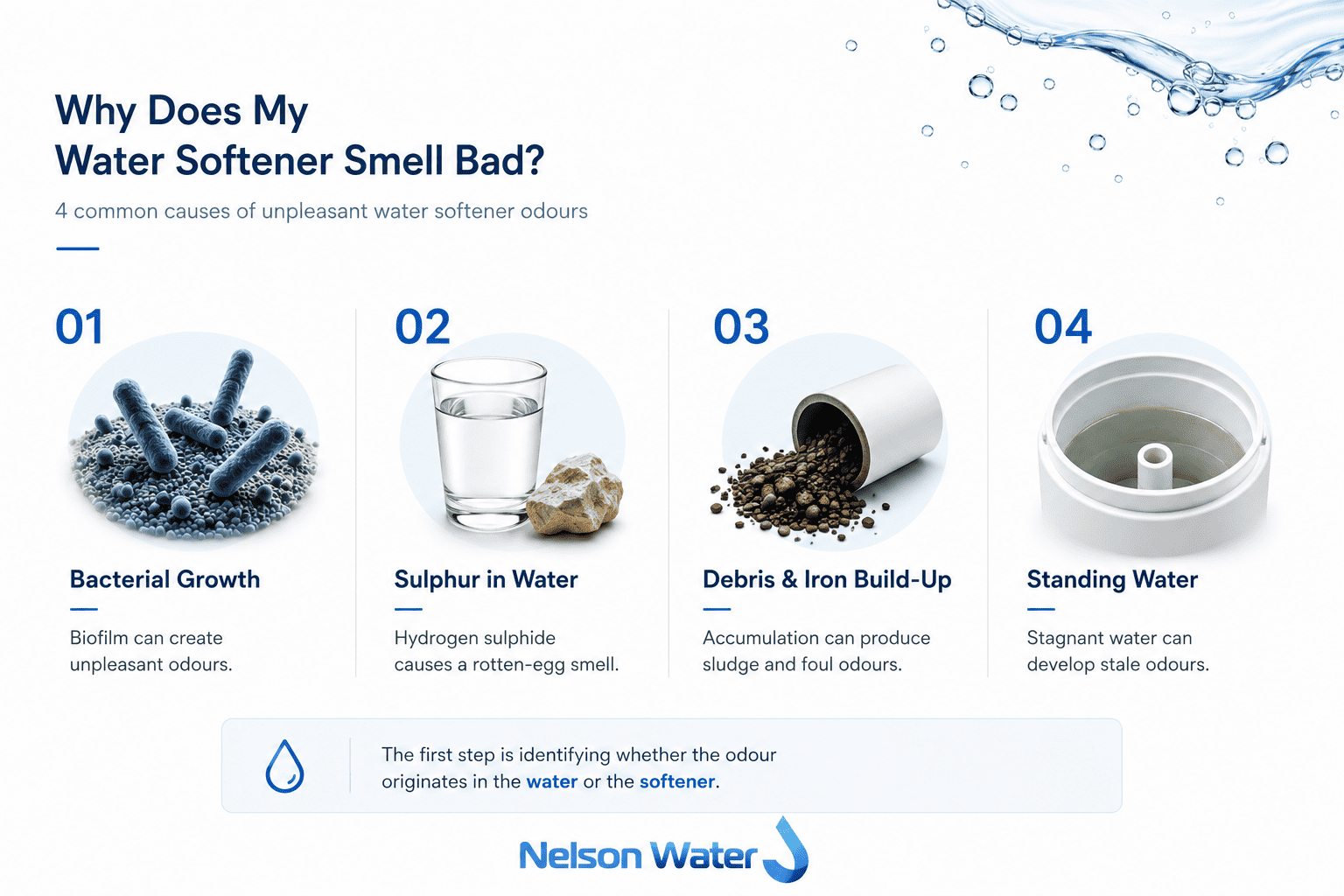
One of the most common reasons for a smelly water softener is the presence of bacteria. When bacteria find their way into your water softener tank, they can produce a foul odour, often compared to rotten eggs. This smell is primarily due to hydrogen sulphide gas, which forms when bacteria interact with elements in the water.
Another common issue is the presence of organic material or impurities in the water softener tank. Over time, these substances can build up, leading to a musty, stagnant smell. Additionally, if your water has a high sulphur content, you might notice a distinct “sulphur smell.” While a water softener alone typically won’t remove this sulphur smell, there are ways to address it.
Common Causes of Water Softener Smells
Bacterial Growth
Bacteria can thrive in the moist, enclosed environment of a water softener tank. When bacteria accumulate, they create a biofilm that can release unpleasant odours. This is especially likely if the water softener hasn’t been cleaned in a while.
Sulphur Content in Water
In areas with high levels of sulphur, or hydrogen sulphide, in the water, the water softener itself can’t remove this naturally occurring compound. Instead, the sulphur smell can linger in the tank, causing a strong, unpleasant odour that becomes noticeable each time you use your water.
Organic Debris and Iron Build-Up
Water softeners that are not properly maintained may collect organic matter and mineral deposits. This debris can accumulate over time, particularly in regions with high iron levels in the water, creating a sludge-like build-up in the tank that emits a foul odour.
Standing Water
Infrequent use of a water softener can lead to standing water in the tank and create a stagnant smell. This occurs because the water doesn’t circulate as often, which can lead to bacterial growth and a noticeable odour.
Solutions to Remove Water Softener Smells
Once you understand the root cause of the smell, you can take action to eliminate it. Here are some effective solutions to consider:
Clean the Brine Tank Regularly
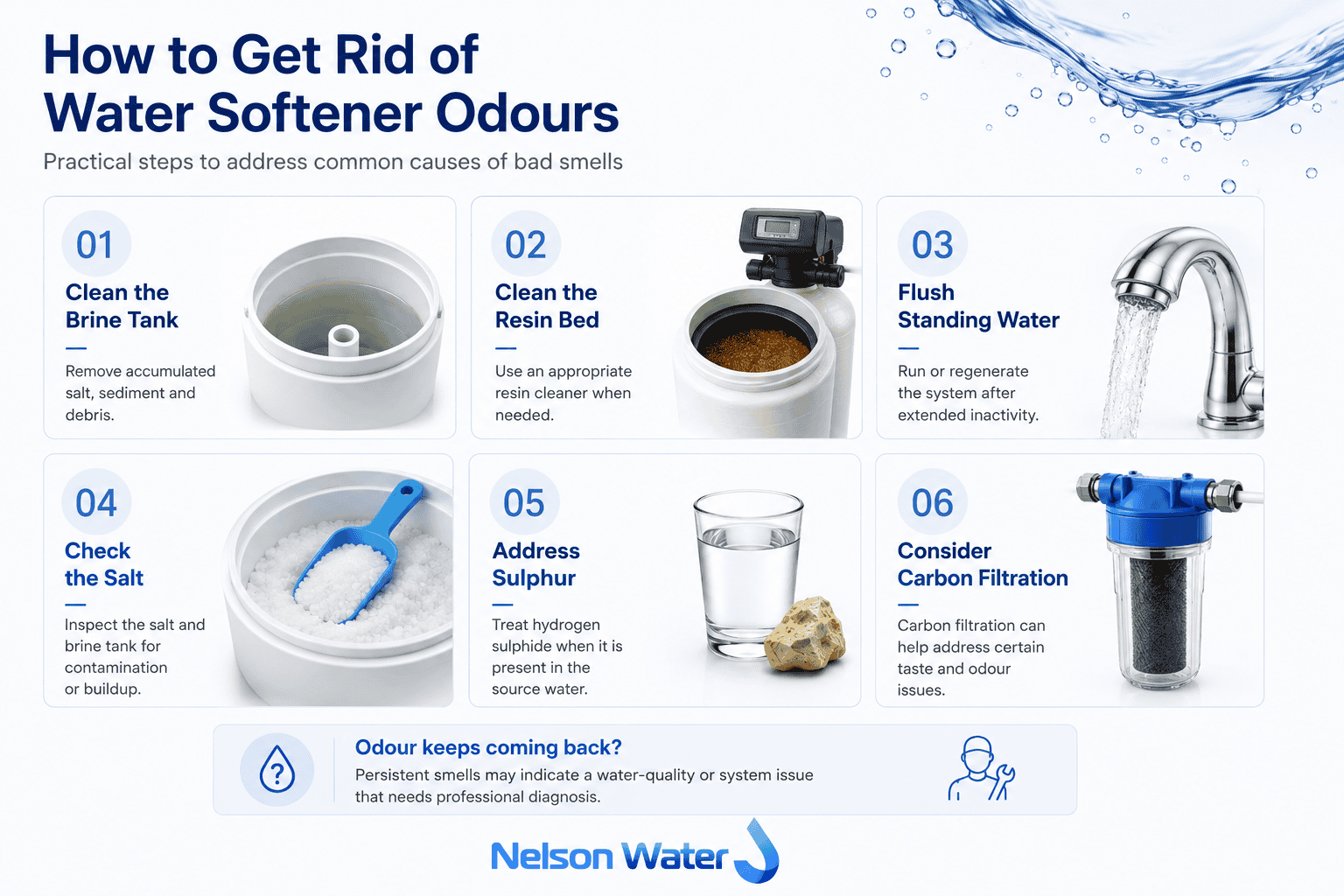
The brine tank should be cleaned periodically to prevent bacterial build-up. Start by emptying the tank, then rinse it with a mixture of water and bleach (typically one cup of bleach to a gallon of water). This disinfects the tank and kills bacteria. Be sure to thoroughly rinse out any bleach residue before refilling the tank.
Disinfect the Resin Bed
A resin bed can also harbour bacteria over time, leading to unpleasant smells. To clean it, add a water softener cleaner specifically designed for resin beds, following the manufacturer’s instructions. Regularly cleaning the resin bed can prevent bacterial growth and keep odours at bay.
Use a Sulphur Removal System
If sulphur is the primary issue, adding a sulphur removal system may be beneficial. These systems are designed to remove hydrogen sulphide gas, effectively eliminating the “sulphur smell” from your water. While a water softener alone won’t remove sulphur, a combination system can tackle the issue more thoroughly.
Maintain the Brine Tank Salt Levels
Low salt levels can lead to hard water, which often contains higher levels of impurities and minerals. Check your brine tank regularly and keep it filled with high-quality salt. This prevents impurities from accumulating in the water softener, which in turn helps reduce odours.
Flush the System with Fresh Water
If your water softener has been sitting idle, flush the tank with fresh water to reduce any stagnant odours. This simple step helps remove stale water and prevents bacterial growth.
Consider Adding a Carbon Filter
Carbon filters are effective at removing odours, including those caused by organic materials and certain gases. By installing a carbon filter, you can address smell-related issues before they reach your water softener. This ensures a cleaner, fresher-smelling system.
Read More: What Is That Fishy Smell In My Water?
Will a Water Softener Remove Sulphur Smell?
Many people believe that a water softener will automatically remove any odours, including the sulphur smell. Unfortunately, this isn’t entirely accurate. A water softener’s primary job is to reduce hardness by removing minerals like calcium and magnesium from the water. However, it doesn’t specifically target sulphur compounds. If your water has a noticeable sulphur smell, you’ll likely need an additional filtration system, such as an iron or sulphur removal filter.
How to Prevent Water Softener Odours in the Future
Prevention is always better than cure. Here are some ways to keep your water softener tank free from odours in the long term:
- Schedule Regular Cleanings: Make it a habit to clean your brine tank and resin bed every 6-12 months to prevent bacteria and mineral build-up. A local water treatment expert, like Nelson Water, can help you with water softener maintenance.
- Use High-Quality Salt: Quality salt not only helps your water softener function more efficiently but also reduces the likelihood of impurities that can cause odours.
- Flush Out Standing Water: If you don’t use your water softener frequently, flush it with fresh water every few weeks. This step prevents water from stagnating and developing a musty smell.
- Install a Pre-Filter: Installing a sediment or carbon filter before the water enters the softener can reduce the number of contaminants in the system, keeping it fresher for longer.

When to Call a Professional
While many odour issues can be resolved with regular maintenance and DIY solutions, there are times when a professional’s help is necessary. If the smell persists despite your best efforts, or if you’re unsure about cleaning and maintaining the system, consider reaching out to a water treatment professional. They can provide specialized equipment, assess the water composition, and ensure your water softener functions as it should.
Nelson Water Can Help With Water Softener Maintenance
A smelly water softener is an inconvenience, but fortunately, it’s one with solutions. By understanding the causes and implementing regular maintenance, you can keep your water softener smelling fresh and working efficiently. Whether it’s bacterial growth, a sulphur smell, or an accumulation of impurities, knowing how to tackle these issues will help you enjoy clean, odour-free water at home.
If you’ve tried these tips and still notice an odour, don’t hesitate to contact Nelson Water. We’re here to help with all your water treatment needs, ensuring you and your family have access to fresh, clean water.