Have you ever wondered why your soap doesn’t lather as well as you’d like or why there’s scale build-up on your faucets? The answer often lies in your water’s hardness level. Understanding your water hardness and knowing how to set the water hardness level on your water softener can make a big difference in how your water feels, tastes, and impacts your household.
This guide will walk you through what water hardness is, how to measure it, and how to set the correct water hardness level for your softener.
What is Water Hardness?
Water hardness measures the amount of dissolved minerals—mainly calcium and magnesium—in your water. These minerals aren’t harmful, but they can cause issues in your home. Water that’s too hard can lead to limescale build-up in pipes, on appliances, and in fixtures. This build-up reduces efficiency, increases energy costs, and shortens the lifespan of your appliances.
Hard water also affects everyday activities, from washing dishes to bathing. Softening water by setting the ideal water hardness can prevent these issues, improving everything from soap lather to appliance longevity. It’s all about finding the right balance.
How Water Hardness is Measured
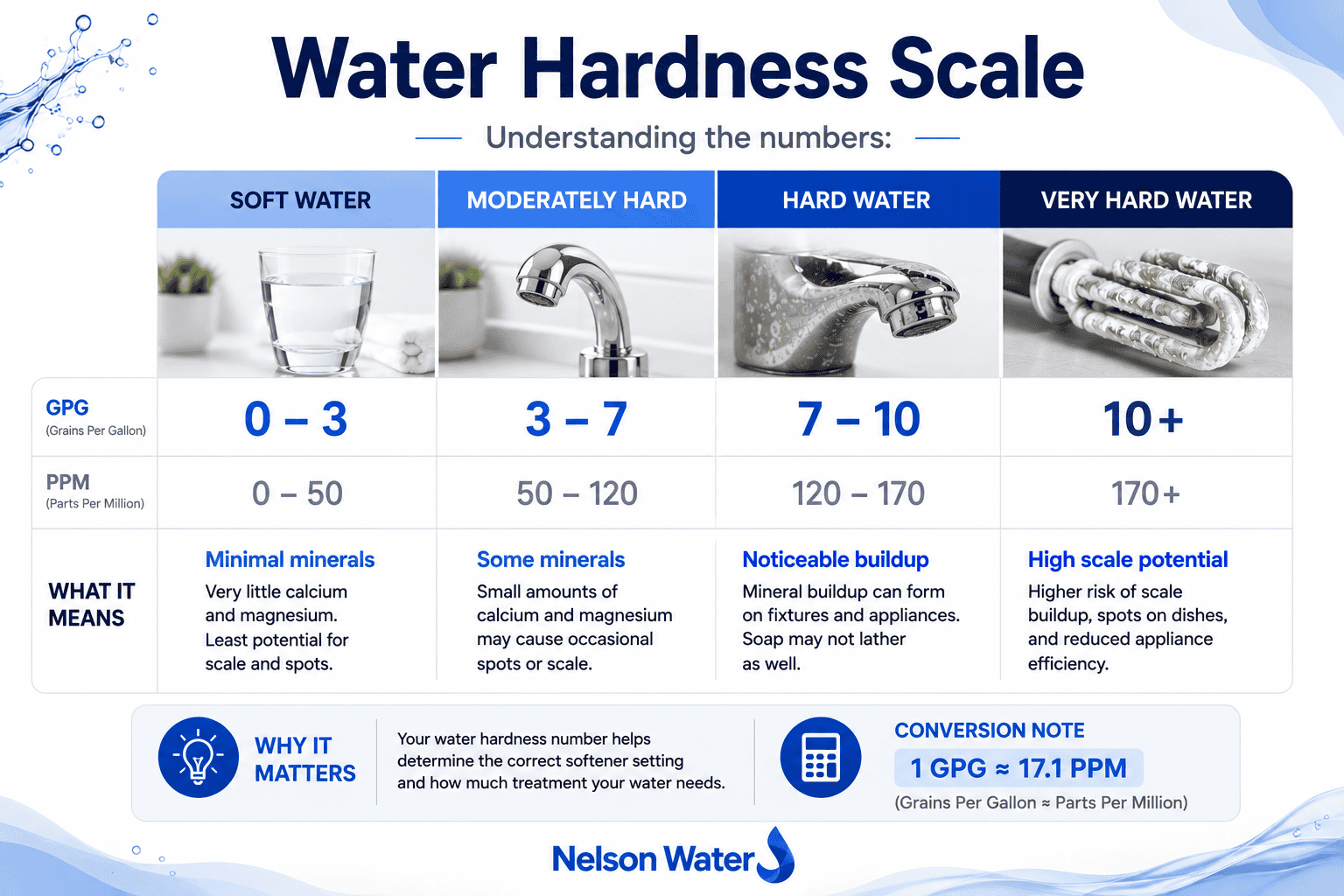
Water hardness is typically measured in grains per gallon (gpg) or parts per million (ppm). Understanding this scale is essential for setting your water hardness level accurately. Here’s a quick guide:
- Soft Water: 0–3 gpg
- Moderately Hard Water: 3–7 gpg
- Hard Water: 7–10 gpg
- Very Hard Water: 10+ gpg
If you’re unsure about your home’s water hardness level, you can use a testing kit or check with your municipality’s water reporting. Knowing your water’s hardness level will help you set the water hardness setting for your water softener to the ideal range, ensuring that your system is working efficiently.
Suggested Reading: Well Water Testing in Ontario: Everything You Need to Know
Why the Right Water Hardness Setting is Essential
Setting the correct water hardness number on your softener is crucial for achieving optimal water quality and maximizing your water softener’s efficiency. If the setting is too low, your softener may not remove enough minerals, leaving you with hard water issues. If it’s set too high, you could be overusing the softener’s resources, which might lead to increased costs without additional benefits.
In essence, the right water hardness setting can improve the quality of life in your home, ensuring that you’re getting all the advantages of softened water. Plus, it reduces the frequency of repairs and replacements for your household appliances and plumbing.
Finding Your Ideal Water Hardness Setting Number
So, how do you determine the ideal water hardness setting for your softener? It starts with understanding your specific water quality and household needs.
- Step 1: Test Your Water – First, test your water hardness level. You can use an at-home test kit or learn from your local water authority. The test will give you a reading in either gpg or ppm, which you’ll use to set the softener.
- Step 2: Adjust Based on Household Needs – The ideal water hardness setting for each household can vary based on water usage and appliance needs. For example, homes with high water use or sensitive appliances may benefit from a slightly lower hardness setting to protect these investments.
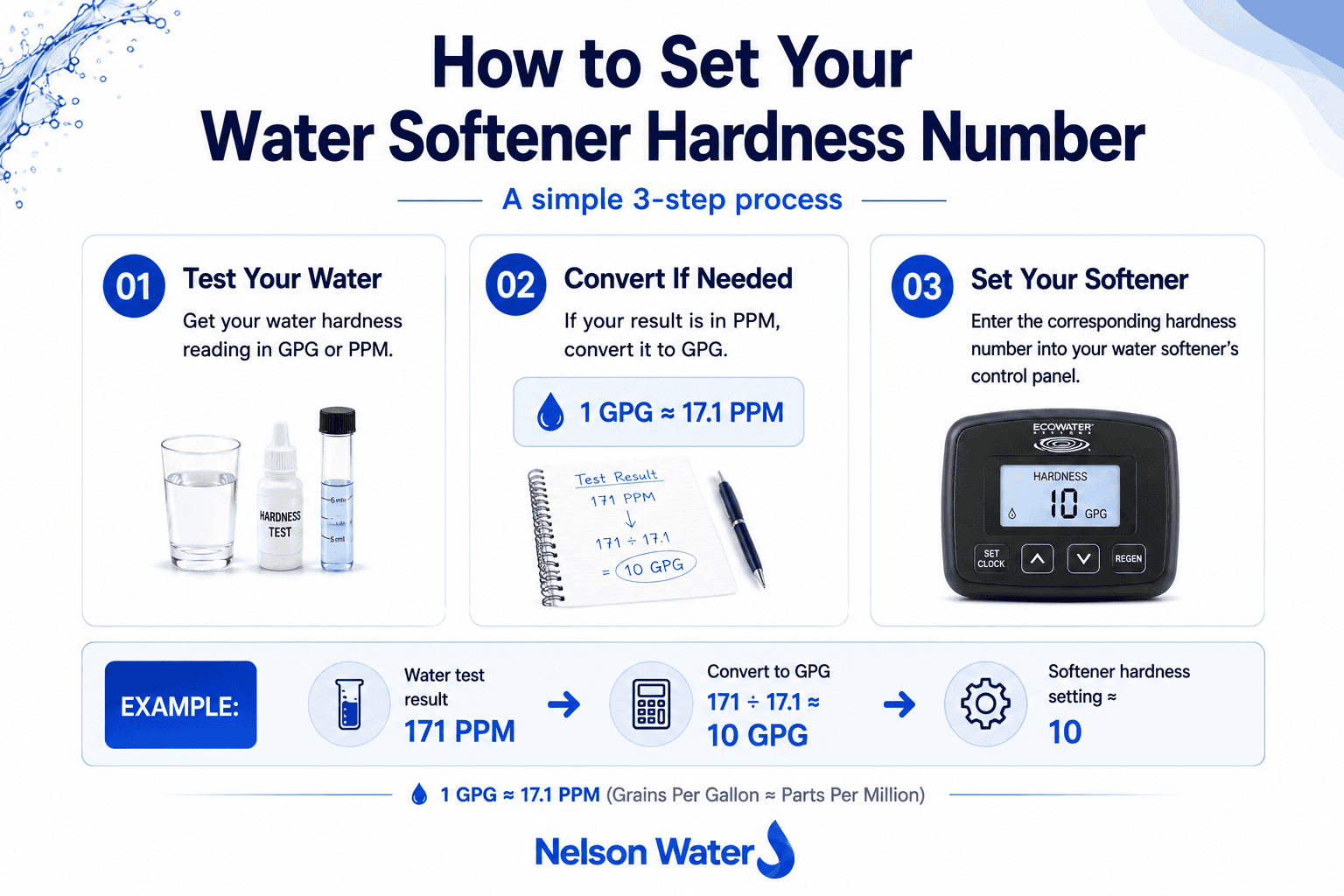

How to Set the Water Hardness on Your Softener
Once you have your hardness level, setting the water hardness on your softener is straightforward. Here’s a step-by-step guide to get it just right:
- Identify the Current Water Hardness – You’ll need to know your water’s hardness level in either gpg or ppm.
- Adjust the Water Softener Control – Most softeners have a control panel where you can input the water hardness setting. Follow your softener’s manual to locate this setting and adjust it to the tested hardness level of your water.
- Monitor and Adjust as Needed – Over time, water conditions can change. Periodically testing your water hardness and adjusting the setting on your softener will keep your system running at peak performance.
By setting the right hardness level, you ensure that your water softener provides optimal results, keeping your water quality high while avoiding unnecessary wear on the softener itself.
On The Blog: Is Using Soft Water Better for Washing Your Car?
Common Questions About Water Hardness Levels and Softeners
Here are some common questions about water hardness levels and setting the water hardness on a softener.
- What happens if my water hardness setting is too high or too low?
If it’s too high, the softener may regenerate more than needed, wasting salt and water. If it’s too low, you’ll likely experience issues associated with hard water, such as mineral deposits. - How often should I adjust the water hardness level on my softener?
It’s recommended to check and adjust every six months or if you notice changes in your water quality. Annual maintenance and testing are a great practice to keep your system running smoothly. - Is there an ideal range for every household?
While general guidelines exist, each household may need slight adjustments based on water use, local water quality, and personal preference. The key is finding a balance that works best for your home.
Have Questions About Finding The Right Water Hardness Number?
Not sure what your water hardness number means?
Nelson Water can test your water, explain the results clearly, and recommend the right softening or filtration solution if needed.