
If you’ve ever noticed your softened water tasting salty after regeneration, you’re not alone. This issue can be frustrating and raise questions about your water softener’s functionality. The salty taste often stems from the regeneration process, designed to recharge the system and maintain its performance. However, when something goes wrong, residual salt can end up in your water.
This blog dives into the reasons why your softened water tastes salty after regeneration, explains the water softener regeneration process, and provides actionable tips to resolve the issue. Let’s uncover how to get your softened water to taste fresh and clean.
The Water Softener Regeneration Process: A Breakdown
Water softeners are crucial for removing hardness minerals like calcium and magnesium from water. These systems use a process called ion exchange, which involves replacing hard minerals with sodium ions. Over time, the resin beads responsible for this exchange become saturated with minerals and must be refreshed. That’s where the regeneration cycle comes in.
Key Steps of the Regeneration Cycle
Backwash: This step reverses the water flow, flushing out debris and sediment from the resin bed.
Brine Draw: A saltwater solution (brine) is pulled into the resin tank to recharge the resin beads with sodium ions.
Slow Rinse: The brine passes through the resin bed, allowing the sodium ions to replace the hard minerals.
Fast Rinse: A high-speed water flow flushes out the remaining brine and re-compacts the resin bed.
Refill: The brine tank is refilled with water to dissolve salt for the next regeneration cycle.
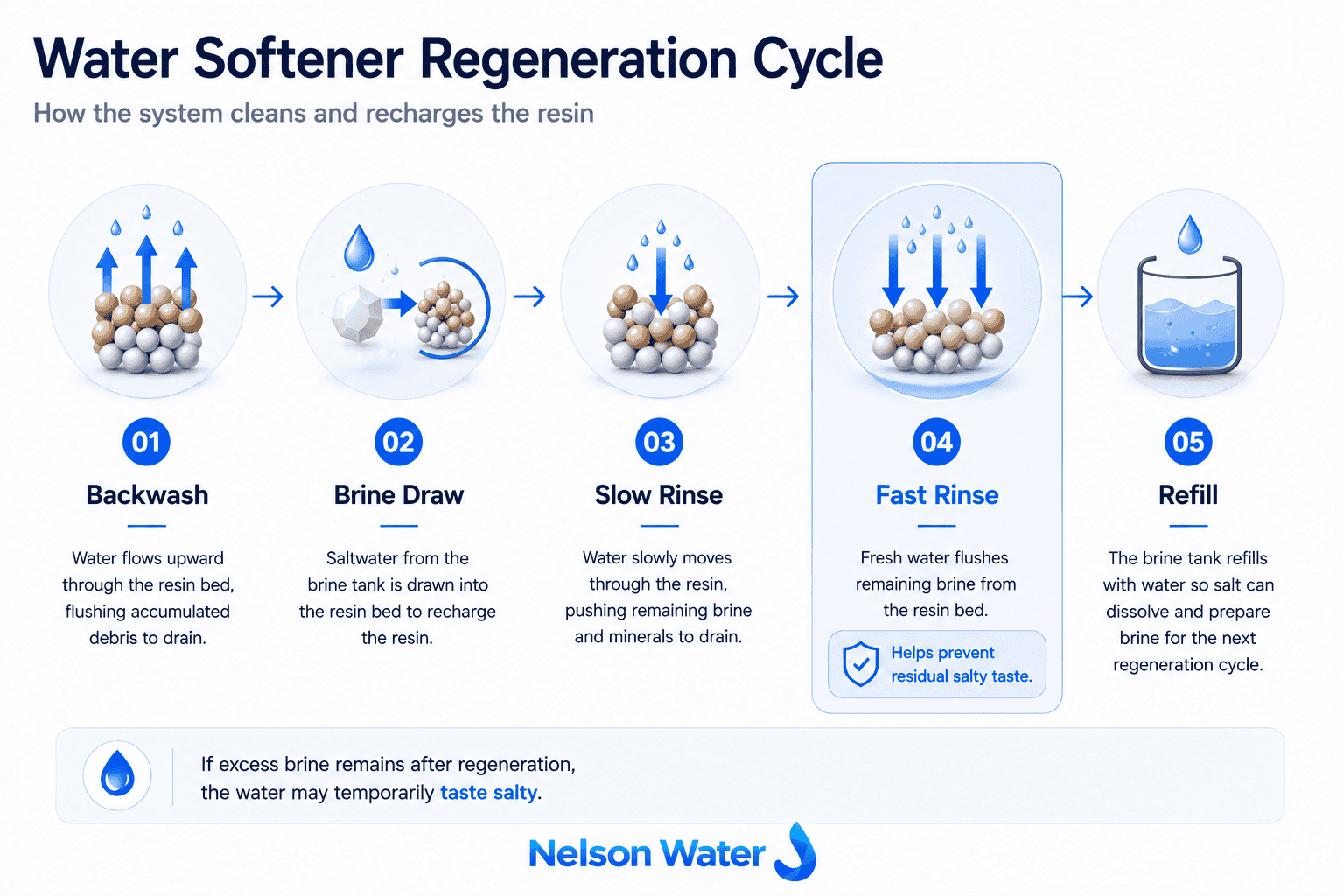
While this process effectively maintains softened water, malfunctions or improper settings can result in salty-tasting water.
On the Blog: What Is Reverse Osmosis? The Complete Guide to RO Water Filtration
Why Does Water Taste Salty After Regeneration?
There are several potential causes behind a salty taste in your water following the regeneration process. Let’s examine the most common reasons:
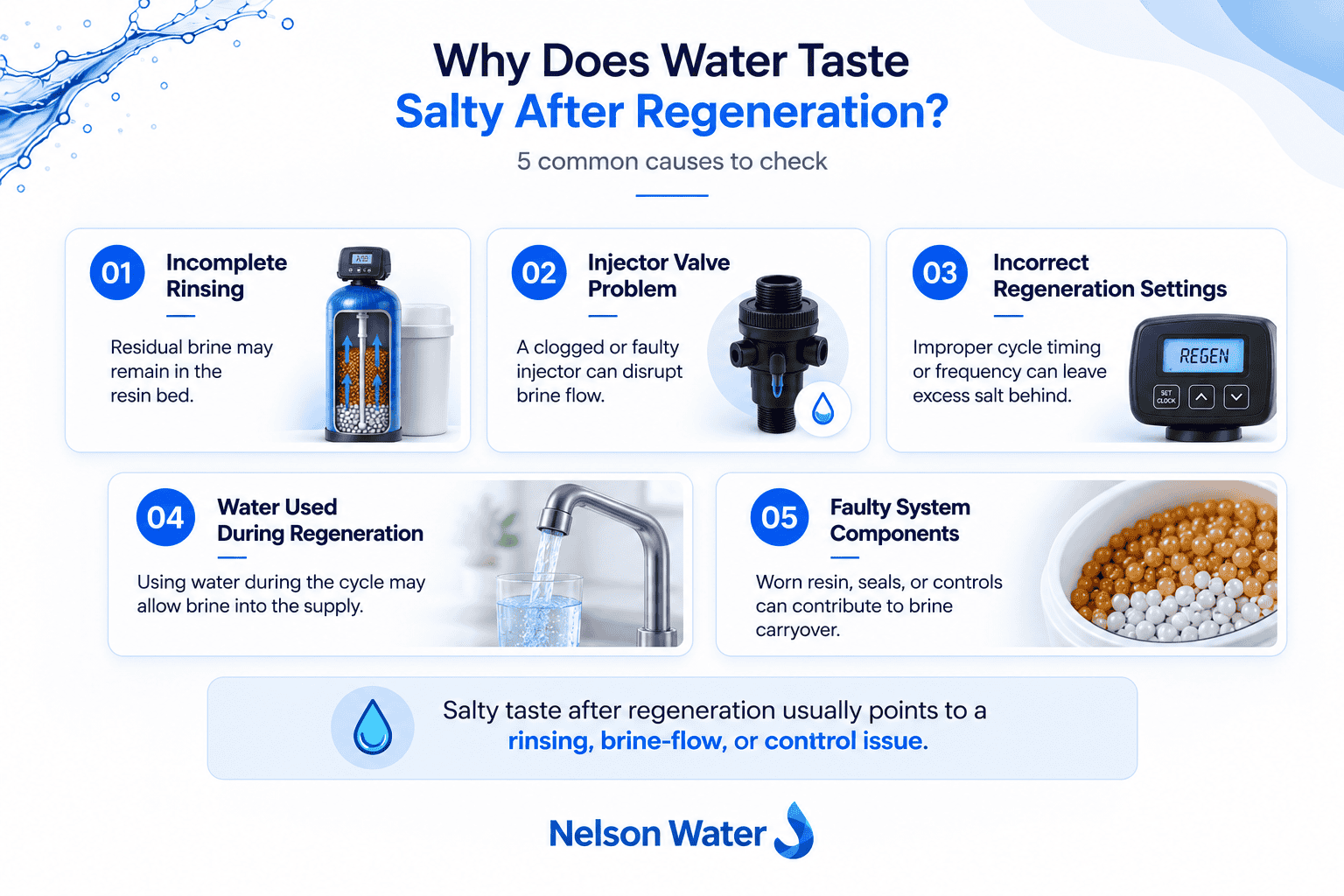
Incomplete Rinsing of the Resin Bed
If the resin bed isn’t thoroughly rinsed during the regeneration process, residual brine can linger and mix with your water supply. Causes of incomplete rinsing include:
Clogged Drain Lines: Obstructions in the drain line can hinder the flow of water needed to flush out brine.
Low Water Pressure: If your home’s water pressure is insufficient, it may not fully rinse the resin bed.
Malfunctioning Injector Valve
The injector valve regulates the flow of brine into the resin tank. A clogged or faulty valve can disrupt the brine draw and leave the resin bed oversaturated, resulting in salty-tasting water.
Incorrect Regeneration Frequency
Setting the regeneration frequency too high or too low can lead to issues. Over-frequent regeneration may leave brine behind, while infrequent cycles may cause resin bead saturation, impacting the ion exchange process.
Water Usage During Regeneration
If water is used in the home while the softener is regenerating, brine can bypass the system and enter your water supply. This is a common issue when regeneration occurs during peak usage times.
Faulty System Components
Worn-out or malfunctioning parts, such as the resin bed or control valve, can lead to improper regeneration and brine carryover.
On the Blog: Does Softened Water Have a Distinctive Taste?
Preventing Salty-Tasting Water: Practical Solutions
Addressing salty water after regeneration involves troubleshooting and adjusting your water softener system. Here’s how you can prevent this issue:
Maintain Your Water Softener
Regular maintenance is key to ensuring your water softener operates efficiently. Steps to include:
- Clean the Drain Line: Check for blockages that may impede the brine rinse process.
- Inspect the Brine Tank: Ensure the tank is free of debris and salt bridges (hardened salt formations that block water flow).
- Service the Injector Valve: Clean or replace the injector valve if it’s clogged or malfunctioning.
Adjust Regeneration Settings
Improper settings can directly affect the performance of your water softener. To optimize:
- Set the Right Frequency: Refer to your system’s manual or consult a professional to determine the ideal regeneration frequency based on water hardness and usage.
- Time Regeneration Correctly: Schedule regeneration during periods of low water usage, such as late at night.
Monitor Water Pressure
Low water pressure can interfere with proper rinsing of the resin bed. Use a pressure gauge to ensure your home’s water pressure is within the range recommended by your softener manufacturer.
Avoid Water Usage During Regeneration
If possible, refrain from using water during the softener’s regeneration cycle. Many systems have a bypass feature to ensure brine doesn’t enter the household supply.
Seek Professional Assistance
If the issue persists despite your efforts, consult a water treatment professional. They can:
- Diagnose Complex Problems: Persistent salty water may signal worn-out resin beads, a malfunctioning control valve, or other issues that require expert attention.
- Perform System Overhauls: Professionals can clean and repair your system to restore optimal performance.
Benefits of Water Softener Regular Maintenance
Properly maintaining your water softener doesn’t just eliminate salty-tasting water. It also extends the life of your system, improves efficiency, and ensures consistently softened water. Neglecting maintenance can lead to costly repairs and degraded performance.
When to Replace Your Water Softener?
If your water softener is over 10–15 years old or continues to cause problems despite repairs, it may be time for a replacement. Modern water softeners are more efficient and have advanced features to reduce maintenance and ensure reliable performance.
Addressing The Salty Taste of Softened Water
Salty-tasting water after a regeneration cycle can be inconvenient and off-putting, but it’s a problem that can be resolved with proper troubleshooting and maintenance. Common causes include incomplete rinsing, incorrect regeneration settings, or system malfunctions. Addressing these issues ensures your water remains fresh, clean, and safe.
If you’re still experiencing issues with your water softener or need help maintaining your system, Nelson Water is here to assist. We offer expert water treatment services to keep your system running smoothly.
Ensure Reliable Water Quality with Nelson Water
At Nelson Water, we’re dedicated to providing top-notch water treatment solutions for homes across Ottawa. Whether you’re dealing with salty-tasting water, system malfunctions, or need a new water softener, our experienced technicians are ready to help.
Contact us today to schedule an appointment or learn more about our services. Let us help you enjoy the benefits of clean, softened water every day.
Salty Water After Regeneration?
Not sure why your water tastes salty?
A salty taste after your softener regenerates can point to brine tank, valve, drain line, or system setting issues. Nelson Water can inspect your system, identify what’s causing the problem, and help get your water tasting right again.